
From compound to finished part, under one roof
Five workshops share one quality system: moulding, precision die cutting, CNC machining, hardware stamping, and inspection and packing.
Production
Machines chosen to match the part, not the other way round
Every enquiry is routed by geometry, material and annual volume. A 2 mm silicone gasket and a 200 mm bakelite insulating plate travel through different departments, on equipment sized for their tolerance and batch size.
Five workshops
Each workshop has its own supervisor and inspection point.
Silicone rubber moulding
8 × 200 t and 12 × 250 t vacuum vulcanising presses plus in-house compound mixing. Compression, transfer and injection moulding for keypads, O-rings, seals, gaskets and custom profiles.
Precision die cutting
Rotary and flatbed lines for half-cut and full-cut work in PET, PC, EVA foam, silicone sheet, graphite and adhesive laminates. Multi-station rotary runs feed, cut, strip and rewind automatically.
CNC machining
Complex profiles in metal and non-metal materials, fixtures and prototype parts; the CNC workshop was added in the 2025 expansion.
Hardware stamping
Insulation pads and metal parts punched, formed and laminated with 3M 9448A and other single or double-sided adhesive tapes.
Inspection and packing
First-article, in-process and final inspection against drawings; 100% visual check on keypads and appearance parts before packing.
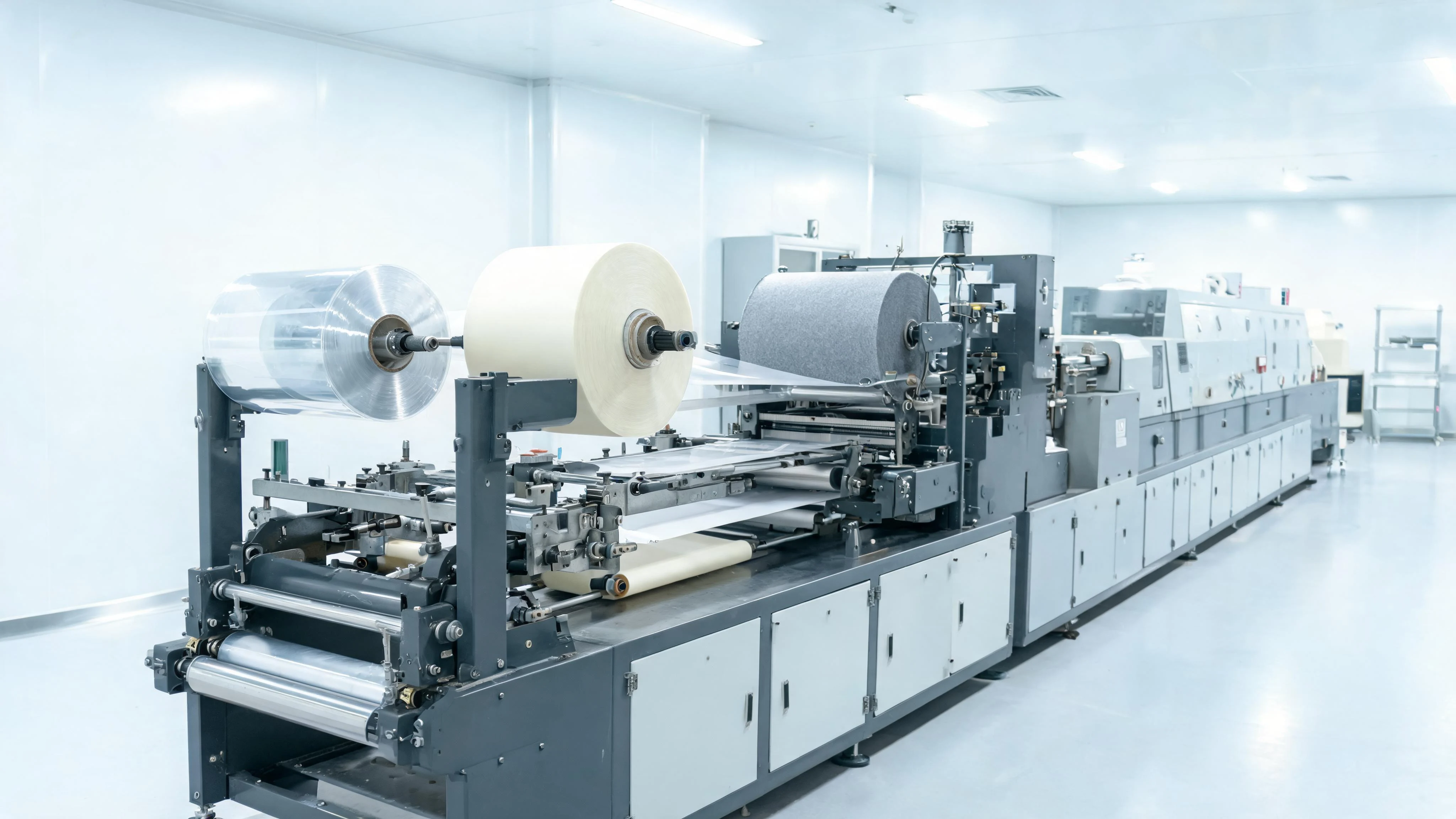
Equipment
Capacity figures are current as of the 2025 workshop expansion.
| Equipment | Capacity / note |
|---|---|
| Vacuum vulcanising presses | 12 × 250 t |
| Vulcanising presses | 8 × 200 t |
| Precision die cutting | Rotary and flatbed lines |
| CNC machining | Workshop added in 2025 |
| Rubber compound mixing | In-house mixing |
| Quality systems | ISO 9001 · ISO 14001 · IATF 16949 |
O-ring material selection
Standard sizes follow common O-ring dimension tables; hardness and colour are set by the application.
| Material | Hardness | Temperature | Typical use |
|---|---|---|---|
| NBR (nitrile) | 70 Shore A, black | up to 100 °C | Oil and water seals, general purpose |
| VMQ (silicone) | 50 Shore A typical, any colour | up to 200 °C | Soft, high-elasticity seals; food and medical contact parts |
| FKM (fluororubber) | 75 Shore A, green | up to 280 °C | Wear and chemical resistant seals |
Insulation pad materials
The pad separates conductive parts, carries mechanical load and adds sealing or damping where needed.
| Material | Working temperature | Notes |
|---|---|---|
| Nylon | 65 °C continuous | Chemical machinery, corrosion-resistant gears and blanks |
| PTFE (Teflon) | High temperature, chemical resistant | Non-stick, high-lubricity insulation |
| Red steel / blue kraft paper | High temperature, flame retardant | High-insulation separator between metal parts |
| Bakelite (phenolic) | 140 °C continuous, 300 °C short term | Dense 1.45 g/cm³ insulation board |
| POM (acetal) | -40 to 100 °C, 120–140 °C short term | Machined insulation and mechanical parts |
| PP / PVC / PET | Grade dependent | Cost-effective, rigid or high-strength films |
How an order runs
Nine steps from enquiry to delivery; the drawing is approved before any tooling is cut.
Enquiry
Drawing, sample or specification plus annual volume.
Requirement review
Material, tolerance, surface and assembly method checked.
Quotation
Unit price, tooling cost and lead time.
Drawing approval
DFM comments and final drawing confirmed.
Contract and tooling
Tooling cut and compound prepared.
Sample inspection
First article measured and reported.
Mass production
Moulding, die cutting or stamping at agreed capacity.
Final inspection
Dimensional and appearance check before packing.
Delivery
Export packing, shipping documents and after-sales follow-up.
Not sure which process fits your part?
Send the drawing and expected volume. We will tell you whether moulding, die cutting or stamping is the cheaper route at that quantity.